Blackjack

Blackjack Mastery: A Sophisticated Exploration of the World’s Most Strategic Casino Game

Introduction: The Enduring Allure of 21

Among the glittering games of chance that populate casinos, blackjack holds a unique distinction. It is elegant in its simplicity, yet richly complex for those who pursue mastery. Unlike roulette or slots, where luck reigns supreme, blackjack offers players a rare proposition in the gambling world: the opportunity to influence outcomes through strategy, discipline, and mental agility. Whether seated at a velvet-covered table in Monte Carlo or playing a live-dealer session from a sleek mobile app, blackjack continues to captivate gamblers with its blend of intellect and intrigue.

A Brief History of Blackjack: From French Roots to Global Fame

The game we now know as blackjack evolved from a French card game known as “Vingt-et-Un,” or “Twenty-One,” popular in the 1700s. It spread throughout Europe before making its way to North America, where it developed its modern characteristics.

  • The Origin of the Name: In early American casinos, bonus payouts were offered for a hand consisting of the ace of spades and a black jack (either the jack of spades or clubs). While the bonus disappeared over time, the name “blackjack” remained.

  • Global Expansion: Blackjack gained massive popularity through its adoption in Las Vegas in the 20th century and quickly spread to casinos worldwide, becoming a staple of both land-based and online gaming establishments.

  • Cultural Impact: The game has featured in countless films, books, and stories, often portraying the blackjack table as a battleground of wit, will, and daring.

Today, blackjack is more than a casino classic—it’s a cultural symbol of calculated risk and refined gambling.

Understanding the Basics: Rules That Invite Strategy

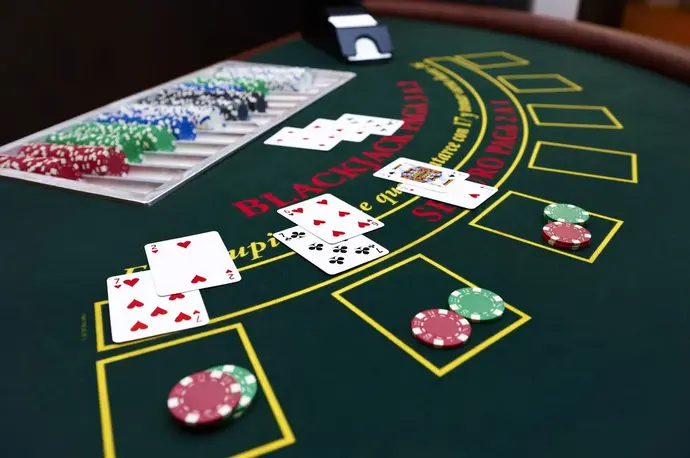
The primary goal in blackjack is straightforward: beat the dealer without exceeding a total of 21. Each card has a value—numerical cards retain their face value, face cards count as ten, and aces are worth either one or eleven, depending on what benefits the hand.

  • Gameplay Mechanics:

    • Hit: Request another card

    • Stand: End your turn and keep your current hand

    • Double Down: Double your initial bet and take one final card

    • Split: If dealt a pair, split the hand into two separate ones, with an equal bet on each

    • Surrender: Forfeit half your bet to fold early when the odds seem unfavorable

The dealer follows a strict set of rules, typically hitting on 16 and standing on 17 or higher. These mechanics provide a predictable structure, allowing players to apply statistical reasoning and strategy to reduce the house edge.

Blackjack Strategy: Where Mathematics Meets Intuition

One of the defining features of blackjack is that it rewards informed decision-making. With the help of mathematical models and probability theory, players can make statistically optimal moves in any given situation.

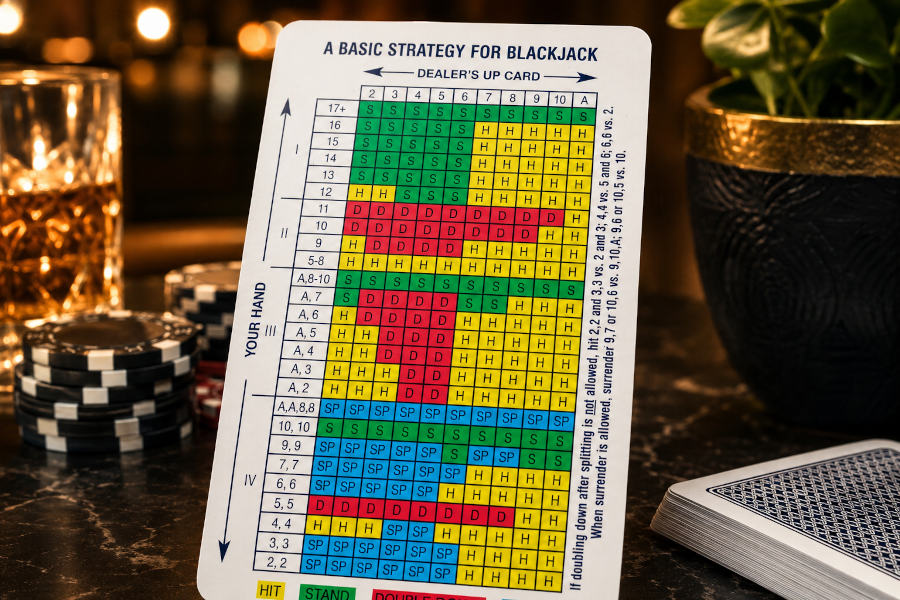
  • Basic Strategy: This is the cornerstone of smart blackjack play. Based on millions of simulations, basic strategy charts tell you the best action to take depending on your hand and the dealer’s visible card. For example, always hitting on a hand of 12 when the dealer shows a 2, or never splitting tens.

  • Card Counting: Popularized in books and films, card counting involves tracking the ratio of high to low cards left in the deck. While often misunderstood, it’s not about memorizing each card, but rather adjusting bets based on the remaining deck’s favorability. When done correctly, it can tip the odds in the player’s favor, albeit slightly.

  • Bankroll Management: Discipline in managing your bets is essential. Knowing how much to wager—and when to walk away—is just as important as playing the cards correctly.

These strategic components transform blackjack into a thinking person’s game, blending probability with psychology.

The Role of Psychology: Calm Amid the Cards

While mathematics plays a central role in blackjack, psychological control is equally vital. Emotions can be an asset or a liability depending on how well they are managed at the table.

  • Avoiding Tilt: Players often fall into the trap of “tilt,” a term borrowed from poker that refers to playing irrationally due to frustration. A few bad beats can tempt even seasoned players to abandon strategy, which is almost always a mistake.

  • Composure and Patience: Blackjack rewards patience. Consistency in applying strategy over time leads to better outcomes, even in the face of short-term variance.

  • Dealing with Pressure: Whether you’re playing for modest stakes or high-roller sums, maintaining focus and avoiding impulsive decisions can make the difference between profit and loss.

Ultimately, the successful blackjack player is as calm and calculating as a chess master, assessing every move with clarity and control.

Modern Blackjack: The Game Goes Digital

The rise of online gambling has propelled blackjack into the digital age, offering a wealth of opportunities for both casual and serious players.

  • Live Dealer Tables: These replicate the in-person casino experience, streaming real-time gameplay with professional dealers, enhancing both immersion and trust.

  • Multiplayer and Solo Options: Players can choose to compete alongside others at a virtual table or play privately at their own pace.

  • Mobile Accessibility: With optimized interfaces for smartphones and tablets, blackjack is now a game you can play during a commute, in a café, or from the comfort of home.

The digital transformation has made blackjack more accessible than ever, allowing players to refine their skills without the intimidating environment of a traditional casino.

Cultural Significance: More Than a Casino Game

Blackjack has long captured the imagination of storytellers, often used as a metaphor for life’s risks and rewards. From Hollywood films like 21 to real-life legends like the MIT Blackjack Team, the game’s mythology is filled with tales of intellect triumphing over the odds.

  • Symbol of Strategy: Blackjack’s image contrasts sharply with games of pure chance, often portraying the player as a sophisticated thinker rather than a reckless gambler.

  • Glamour and Grit: It carries the dual identity of being both glamorous and gritty—a game where elegance meets hustle, and where sharp minds are tested.

For many, blackjack represents more than a pastime; it’s a narrative of control in an uncertain world.

Conclusion: Blackjack’s Timeless Appeal

Blackjack remains one of the most beloved and respected games in the casino landscape. Its enduring appeal lies not in flashy gimmicks or massive jackpots, but in the subtle interplay of skill, psychology, and luck. For those who appreciate games that challenge the intellect and reward strategic thinking, blackjack is not merely a form of entertainment—it is an art form.

Whether you’re a casual player learning basic strategy or a seasoned pro eyeing the shoe for card-counting opportunities, blackjack offers a unique blend of risk and refinement. In a world increasingly dominated by noise and distraction, there’s something profoundly satisfying about a game where calm calculation can lead to triumph. And that, perhaps, is the true magic of 21.

What's your reaction?

Excited
0
Happy
0
In Love
0
Not Sure
0
Silly
0

You may also like

More in:Blackjack