 By Trenton Sam
Card counting remains one of the most misunderstood concepts in the entire gambling world. Thanks to Hollywood movies, pop culture, and sensationalized media portrayals, the general public views card counting as an almost magical skill requiring photographic memory, superhuman mental speed, and clandestine operations. In reality, card counting is nothing more than a structured, mathematical tracking system that shifts the statistical odds slightly in favor of the player. It does not predict the exact next card out of the shoe, nor does it guarantee a win on every single hand. Understanding the true mechanics of card counting separates Hollywood fiction from casino reality.
The Mathematical Foundation of Card Counting
The core principle behind card counting relies on a simple concept regarding deck composition. Unlike roulette or slot machines where every spin is an independent event with fixed odds, blackjack is a game of dependent trials. Every card removed from the deck changes the probabilities for the cards remaining behind.
-
High Cards Favor the Player: Tens, face cards, and aces are valuable to the player because they increase the frequency of natural blackjacks, which pay 3 to 2, and help when doubling down.
-
Low Cards Favor the House: Twos through sixes help the dealer, who must hit stiff hands and relies on small cards to avoid busting.
-
The Running Count: Counters assign point values to cards as they are dealt, adding or subtracting from a running total to gauge whether the remaining deck is rich in high cards or low cards.
Debunking Hollywood Myths About Card Counting
Popular culture has created massive misconceptions that deter everyday players from learning the actual math behind the system. Most movies portray counting as an illicit, genius-level activity that involves memorizing every single card dealt from a six-deck shoe in exact order.
-
Memory Is Not Required: You do not need a photographic memory. Card counters do not memorize sequences; they simply maintain a running tally using a basic positive or negative integer system.
-
It Is Not Illegal: Contrary to popular belief, counting cards using your brain alone is not illegal in any jurisdiction. Casinos hate it because it erodes their house edge, but they combat it through private property rules rather than law enforcement.
-
Winning Every Hand Is Impossible: Even with a high true count favoring the player, variance still dominates short-term sessions. A counter can easily lose ten hands in a row despite holding the mathematical edge.
How Basic Counting Systems Actually Work
The most popular and accessible system for beginners is the Hi-Lo count. It is easy to learn, highly effective, and requires very little mental bandwidth once practiced. The system splits the entire deck into three distinct numerical categories.
-
Low Cards Add Plus One: Twos, threes, fours, fives, and sixes are assigned a value of plus one because their removal from the deck leaves behind high cards that benefit the player.
-
Neutral Cards Equal Zero: Sevens, eights, and nines are neutral and carry a value of zero, meaning they do not affect the tally.
-
High Cards Subtract One: Tens, jacks, queens, kings, and aces are assigned a value of minus one because seeing them leave the table removes player advantages from the remaining shoe.
Converting the Running Count to the True Count
In a single-deck game, tracking the running count is straightforward. However, modern casinos almost exclusively use multi-deck shoes containing six or eight decks shuffled together. Relying solely on the running count in a multi-deck game leads to massive errors because a plus six count means very different things depending on whether there are one deck or five decks remaining in the shoe.
-
Calculating Decks Remaining: The player must visually estimate how many full decks remain unplayed in the dealer shoe.
-
The Division Process: Divide the running count by the estimated number of remaining decks to arrive at the true count.
-
Bet Sizing Adjustments: Wager sizes scale directly with the true count. When the true count rises, the player increases their bets to maximize profit during favorable conditions, and drops back to minimum bets when the count is neutral or negative.
The Reality of Variance and Bankroll Requirements
Even the sharpest card counter in the world will experience brutal losing streaks known as downswings. Because the house edge in blackjack is narrow, even when shifted to a player advantage, short-term luck plays a massive role in outcomes. Surviving these mathematical fluctuations requires a dedicated bankroll completely separate from personal living funds.
-
Risk of Ruin: Without a sufficient bankroll consisting of hundreds of betting units, a counter will inevitably go broke before the law of large numbers can turn the mathematical edge into realized profit.
-
Bet Spread Constraints: Moving from a minimum bet to a massive maximum bet too quickly triggers casino surveillance attention, forcing counters to balance profit potential against cover strategies.
-
Emotional Detachment: Treating wins and losses with complete indifference is mandatory. Tilt destroys even the most mathematically sound card-counting strategies.
Casino Countermeasures and Detection
Casinos are well aware of card counting and employ sophisticated methods to protect their profit margins. While counters try to blend in, modern surveillance teams and automated software monitor table play closely.
-
Continuous Shuffling Machines: Many modern tables utilize machines that shuffle the cards after every single hand, completely neutralizing the ability to track deck composition.
-
Penetration Depth: Pit bosses watch how deep into a shoe the dealer goes before shuffling. If a casino cuts off a large portion of the shoe, the value of counting diminishes.
-
Back Offs: If pit personnel suspect a player is counting, they will politely or forcefully ask the player to stop playing blackjack, though they are permitted to play other casino games.
Frequently Asked Questions
Is card counting considered cheating under the law?
No, card counting using only your cognitive abilities is entirely legal, though private businesses reserve the right to refuse service to any patron.
How long does it take to become proficient at card counting?
With consistent daily practice using training software or physical decks of cards, most people can master the basic Hi-Lo system and true count conversion within a few weeks.
Can you count cards effectively in online live dealer games?
Most online live dealer games feature poor deck penetration and shuffle frequently after only fifty percent of the shoe has been dealt, making card counting virtually impossible online.
Why do casinos allow card counters to play at all if they know about them?
Casinos prefer to handle counters internally rather than ban them outright, often using countermeasures like lower table penetration or shuffling machines to neutralize the threat.
What is a back off in the context of blackjack?
A back off occurs when casino staff approach a player and inform them that they are no longer allowed to place wagers at the blackjack tables due to suspected card counting.
Does card counting work with single-deck games?
Yes, single-deck games offer the highest potential advantage for card counters, but casinos combat this by offering unfavorable payout rules like six to five on blackjacks.
Do card counters need to memorize deviations from basic strategy?
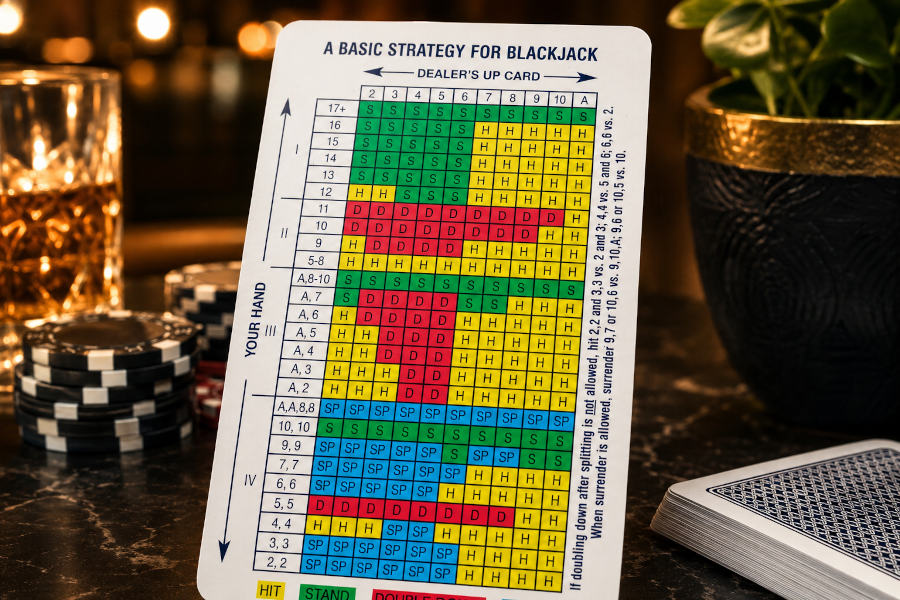
Advanced counters use index numbers to modify basic strategy plays, such as standing on a hard sixteen against a ten when the true count reaches a specific positive threshold.